moral damages wrongful dismissal criteria be challenged on appeal
When an employee receives moral damages after a wrongful dismissal case, the employer may question whether those damages were justified or fairly assessed. This often leads to the next stage of litigation: the appeal process. The key issue becomes whether moral damages wrongful dismissal criteria, as applied by the trial judge, can be successfully challenged on appeal. Since these damages are tied not just to financial loss but to emotional and reputational harm, they often involve subjective judgments. Appeals are possible, but they must be grounded in specific legal arguments and evidence showing that the trial court erred in applying the criteria.
Appellate courts do not lightly interfere with trial decisions regarding damages, as trial judges are seen as being closest to the evidence and witnesses. However, moral damages have particular requirements. They must be based on clear evidence of the employer’s bad faith, unfair treatment, or actions that caused additional harm beyond ordinary dismissal. If the trial judge misapplies these legal principles or relies on inadequate evidence, then the appeal may succeed. In this sense, the Moral damages wrongful dismissal criteria are not immune from challenge, but the threshold to overturn them is high.
The appellant usually argues that the trial judge either misunderstood the law or made findings of fact that were unsupported. For example, if a judge awarded moral damages because of perceived humiliation, but the record showed no testimony or evidence supporting that claim, the employer could argue that the damages were speculative. Similarly, if the trial court failed to consider whether the employer acted in good faith when delivering the dismissal, this could open the door for an appeal. The moral damages wrongful dismissal criteria provide a legal framework, and failure to apply them correctly can be seen as a legal error.
On the other side, employees often defend awards by emphasizing the discretion judges have in wrongful dismissal cases. They highlight evidence such as medical records, witness statements, or patterns of employer misconduct that justified the damages in the first place. Because appellate courts prefer not to interfere with factual determinations, employees may succeed in keeping the award intact if they show that the trial judge carefully assessed the evidence and applied the criteria correctly. This balance ensures that moral damages are only disturbed on appeal when the initial decision is clearly flawed.
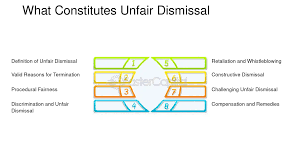
Can moral damages wrongful dismissal criteria be challenged on appeal?
One of the main difficulties in appeals involving moral damages is the subjective nature of emotional harm. Unlike financial damages, which can be calculated precisely, moral damages rely on human experience, dignity, and perception of harm. The moral damages wrongful dismissal criteria attempt to bring structure to this evaluation, but interpretation inevitably varies. Appellate courts step in only when the trial judge’s reasoning goes beyond reasonable limits, such as when damages are disproportionately high compared to the harm proven or when the judge misstates the legal test.
The role of proportionality is also significant. If an appeal demonstrates that the trial court exaggerated the seriousness of the employer’s conduct or overlooked mitigating actions, the appellate court may reduce or eliminate the award. Conversely, if the trial court carefully documented why the dismissal was carried out in bad faith or with cruelty, the appellate court is unlikely to interfere. Therefore, while moral damages wrongful dismissal criteria can be challenged, success depends largely on whether the original decision was unreasonable or legally incorrect.
Employees and employers alike must approach appeals strategically. For employees, defending the award involves emphasizing the credibility of their evidence and the careful reasoning of the trial judge. For employers, the focus must be on demonstrating legal errors, inconsistencies, or overreach in applying the criteria. Both parties should understand that appellate courts prioritize consistency in the law while respecting the trial court’s role in assessing credibility and harm.
In the end, the answer to whether moral damages wrongful dismissal criteria can be challenged on appeal is yes, but only under specific circumstances. Appeals are not opportunities to simply re-argue the case; they are meant to correct errors in law or fact that materially affected the outcome. The appellate process provides an important check, ensuring that awards for moral damages are not arbitrary but are firmly rooted in evidence and legal principles. As a result, while employees may feel vindicated by an award, and employers may feel burdened by one, both must recognize that the appeal system seeks to balance fairness, accountability, and the integrity of employment law decisions.